Mickaël Hœbregs — Typography, Digital Literacy, Webdev

Type foundry — typefaces
Publishing


Utopia 2.0
Education

Digital creation
Practice
My background combines typography, graphic design and digital creation. A graduate in Typography from the École de Recherche Graphique (ERG) in Brussels, I have been working with web technologies since 1998 and participated as a beta tester during the early development of digital creative tools. My practice is rooted in vector design, drawing and digital image production.
Through years of professional and artistic activity, I have developed expertise in visual construction, web design and digital creation. The iPad occupies a central place within my creative workflow. By establishing a direct relationship between the hand, the drawing gesture and the digital medium, it restores an immediacy that places the creator in continuous contact with the image.
Teaching & Experimentation
I teach what I practice. My courses focus on the creation of digital images, from drawing and vector construction to contemporary visual production workflows. Students learn to conceive, produce and defend creative projects using professional tools such as Adobe Creative Cloud and Affinity software. Particular attention is given to both vector and raster image creation, as well as to the relationship between concept, form and communication.
Creation is not limited to software proficiency. Learning to observe, experiment, compose and justify one’s choices is equally essential. Through project-based learning and active pedagogy, students are encouraged to develop autonomy, critical thinking and a personal creative language. Technology evolves constantly; the creative process remains alive through practice, observation and experimentation.
Webdev
A web layout is the structural plan that defines how text, images, videos, navigation menus, and other elements are arranged and organized on a webpage. It acts as a visual blueprint to guide user attention and ensure a smooth browsing experience.
Digital education
Digital education begins with culture, not technology. My work in digital education is rooted in the conviction that understanding digital environments requires more than technical skills. Before learning tools, students must understand the languages, systems and cultural mechanisms that shape contemporary communication. My practice combines digital literacy, typography, visual culture, media education and creative technologies. It explores the relationships between writing, image, information and digital citizenship within an increasingly connected world. Particular attention is given to the transmission of fundamental cultural knowledge through digital media, from alphabetic writing systems to contemporary forms of online communication.
I teach digital culture as a living practice. As a secondary school teacher in Digital Education and Digital Culture for the City of Liège, I develop learning experiences based on active pedagogy, creativity and experimentation.
My courses explore: digital literacy and critical thinking; digital identity and online presence; media and information literacy; artificial intelligence and creative technologies; responsible use of digital tools; copyright and intellectual property; digital citizenship; visual communication and online publishing.
A particular focus is placed on digital alphabetisation through the observation, recognition and construction of letters, numbers and symbols. To support this approach, I design and develop original educational tools, both online and offline, allowing students to explore: uppercase and lowercase letters; numerals & special characters; handwritten and manuscript forms; typographic structures; visual recognition systems; writing as a cultural and technological construct.
Drawing, observation and visual analysis remain central to the learning process. Students are encouraged to understand digital technologies not only as users, but as creators capable of analysing, producing and communicating meaning through signs, images and language.
For me, digital education is not the transmission of tools. It is the transmission of a culture.
Digital literacy begins with writing: Before learning software, platforms or artificial intelligence, students must understand the foundations of written communication and the visual structures that support knowledge transmission.
My teaching explores the alphabet as one of the major inventions of Western culture. Through observation, recognition and drawing of letterforms, students discover how writing systems are constructed and how visual signs produce meaning. To support this learning process, I develop original educational tools, both online and offline, specifically designed for the study of typographic forms and digital writing systems.
These tools allow students to explore: uppercase and lowercase alphabets; numerical systems and punctuation; special characters and typographic symbols; handwritten and manuscript forms; visual recognition and letter construction; the evolution of writing from gesture to digital representation.
Drawing remains central to this approach. By reconstructing characters through observation and digital tools, learners develop a deeper understanding of form, proportion, structure and visual language. The objective is not merely technical proficiency but the development of a genuine graphic culture. Students learn to read, analyse, construct and use visual signs consciously within contemporary digital environments.
Through the creation of custom pedagogical tools and experimental interfaces, digital technology becomes a medium for understanding culture rather than a simple collection of applications.
Graphic Design Methodology & Digital Typography
Practice
Typography indicates the degree of evolution of a civilisation.
For me, typography is not merely a tool for displaying text. It is one of the most sophisticated expressions of human culture, revealing how a society organises knowledge, structures information and transmits ideas across generations.
My approach to graphic design is rooted in typographic culture. Trained in Typography at the École de Recherche Graphique (ERG), I developed my research around the principles established by De Stijl and the Bauhaus, movements that sought to align visual form with intellectual clarity and social progress.
A graphic composition acquires value when it communicates on several levels of reading simultaneously. Beyond its immediate appearance, it should operate through structure, rhythm, symbolism, cultural references and conceptual coherence.
Typography, therefore, becomes the framework through which image, colour and content form a unified visual language.
Methodology & Transmission
Design is not the accumulation of effects. It is the organisation of meaning. Students learn to develop projects through a methodology that combines observation, research, visual culture and technical mastery.
Topics include: typographic culture and history; classification and selection of type families; composition and grid systems; graphic hierarchy and information architecture; visual identity design; print and web methodologies; vector and raster construction; colour theory and colour profiles (RGB, CMYK); publication workflows; interface and digital design; creative methodologies involving artificial intelligence.
Particular attention is given to the relationship between form and meaning. Students learn to justify each creative decision and to consider design as a process of communication rather than decoration. Artificial intelligence is approached as a tool for exploration and production, integrated within a structured creative methodology that preserves critical thinking, authorship and cultural awareness.
Writing, printing, publishing and digital communication are not merely technical achievements. They are cultural constructions that reveal how societies create, organise and transmit knowledge.
My practice, my research and my teaching are all rooted in this conviction.
Mobile Creative Practice on iPad
The creative process begins with direct contact. My professional workflow is centred around the iPad Pro, a device that restores a direct relationship between gesture, drawing and visual construction. The creator remains in permanent contact with the work surface, allowing ideas to move seamlessly from observation to execution. This approach combines the immediacy of traditional drawing with the possibilities offered by contemporary digital technologies.
Projects are developed through both vector and raster workflows, depending on the nature of the visual problem being addressed. Vector construction allows precision, scalability and structural control, while raster techniques facilitate texture, gesture and pictorial expression. Understanding when and how to use each approach is an essential component of contemporary visual creation. The objective is not the mastery of software alone, but the development of a creative methodology where technology becomes a natural extension of observation, thought and drawing.
The best digital tool is the one that disappears behind the creative act.

Workshops Digital_art
Practice
Digital creation becomes meaningful when it reaches an audience. The Digital Art Workshops are collective, project-based learning experiences combining artistic creation, visual communication and cultural engagement. Students develop thematic exhibitions built around a common concept while maintaining their individual creative identity. The objective is to produce a coherent body of work capable of being presented in a professional exhibition context.
Projects combine multiple digital image-making techniques, including: vector illustration; pixel-based image creation; digital drawing; photography and image manipulation; mixed-media digital composition; experimental visual production.
Particular attention is given to the relationship between individual expression and collective construction.
Methodology & Exhibition Process
Creating is only one part of the artistic process. Sharing and exhibiting are equally important.
Students participate in every stage of the project: thematic research; concept development; visual production; collective curation; exhibition design; communication and promotion; installation and presentation.
A distinctive aspect of the workshops is the direct relationship established with cultural institutions and exhibition venues.
Students are encouraged to identify potential partners, prepare presentation dossiers, contact organisations and negotiate exhibition opportunities themselves. Through this process, they gain practical experience of the realities of artistic dissemination and cultural project management.
Exhibitions may take place in: cultural centres; libraries; educational institutions; public spaces; galleries; local cultural events.
This approach transforms the creative process into a complete artistic experience, extending from conception to public presentation.
Pedagogical Objectives
Students learn to: develop a personal visual language; work within a collective project; articulate and defend artistic choices; understand exhibition practices; communicate with cultural partners; produce professional-quality visual work; engage with audiences outside the classroom.
The workshop places creation within a real-world context where artistic production, communication and cultural participation become inseparable.
An artwork truly exists when it enters into dialogue with a public.
Art
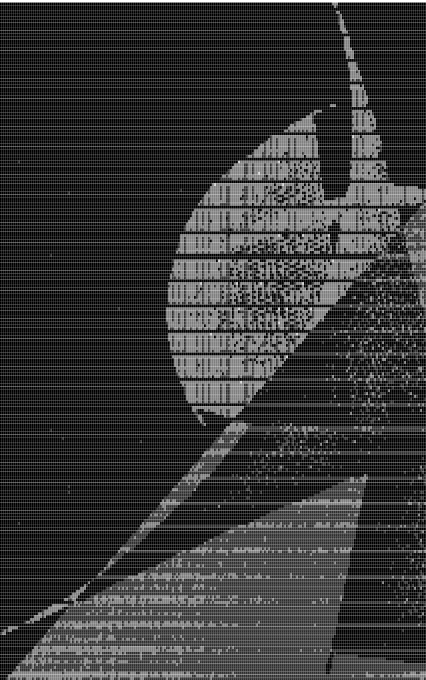
< When two forms encounter one another, an event occurs | Contact does not produce fusion Contact produces fracture | One segment breaks | A trajectory is abandoned | A new trajectory emerges | Transformation begins > < The fracture introduces what is not a third dimension but the perception of an additional horizontal plane | The work remains flat | The surface remains unchanged | Yet a new spatial state becomes visible | A second reading appears inside the first > < The same principle governs every migration inside this gallery | A drawing encounters a scanner | A scanner encounters data | Data encounters analysis | Analysis encounters language | Language encounters ASCII | ASCII encounters matter > < Each contact generates a fracture | Each fracture generates a transformation | Each transformation generates a new state of existence > < Silicon does not create the work | Silicon observes the passage | It measures the fracture | It records the migration | It reveals structures hidden inside the gesture > < This gallery does not simply document migration | It makes migration visible. | The passage itself becomes material | The transition itself becomes form > < An artwork may exist simultaneously in several states > :: CARBON :: NEGATIVE :: MIGRATION :: CODE :: MATTER :: < None of these states is final | None possesses greater legitimacy than the others | Identity resides not within a single form but within the continuity of transformation | The artwork is not the image | The artwork is the passage between its states > < Fundamental is the first demonstrated migration within the SCRYPT_CODEX From a single carbon origin emerge multiple valid states >
Art — selected works
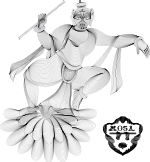
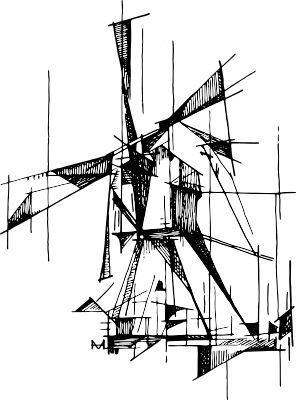
Delft windmill
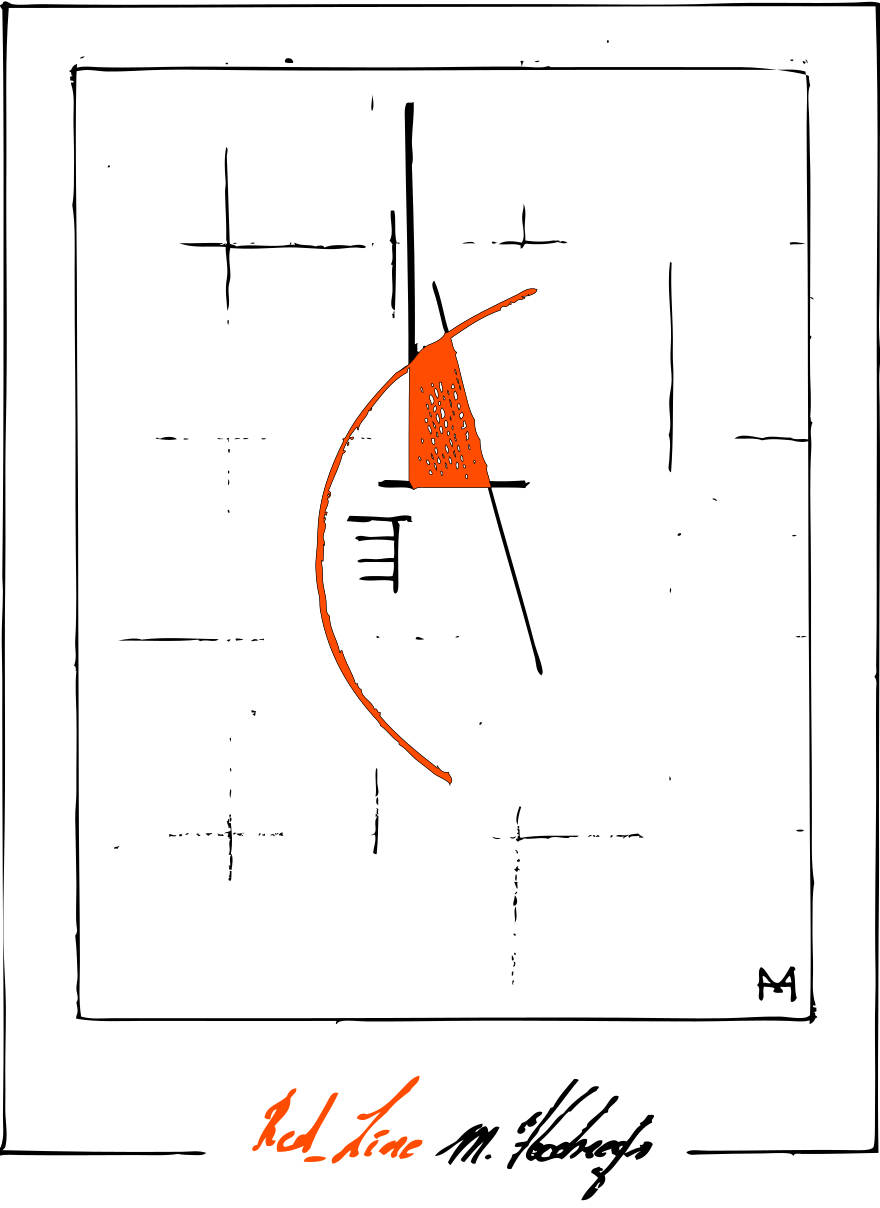
Red_line
Red_Line is the result of a long process of reduction.
A blue note in space. An architecture of signs built through minimal means and maximum presence.
Archetypes/Reliques (PDF)
Biography
Mickaël Hœbregs
Mickaël Hœbregs is a Belgian artist, typographer and educator. His teaching practice is rooted in active artistic research, where drawing, typography, digital creation and visual systems converge. Trained in Typography at the École de Recherche Graphique (ERG) in Brussels, he develops a multidisciplinary practice exploring the relationships between form, structure, landscape and language. Rather than separating creation from education, he considers transmission as a continuation of artistic practice: knowledge remains alive through experimentation, observation and making. Alongside his personal work, he has collaborated on projects for numerous international brands including Alstom, Alfa Romeo, Fiat, Lancia, Nissan, Peugeot and Sony Music. His work is represented in public and institutional collections, including the Museum of Sacred Art, the Klingspor Museum and the Belfius Art Collection. He is also the author of a publication released by Max Milo Éditions in Paris. He currently teaches digital literacy, digital creation, typography and web development in higher education.